
Ford Transit Wheelchair Vans for NEMT
Plan around wheelchair riders, accompanying passengers, and gurney requirements with Ford Transit 350 and 150 options. National Fleet Sales helps you compare full-size van configurations and coordinate your purchase.
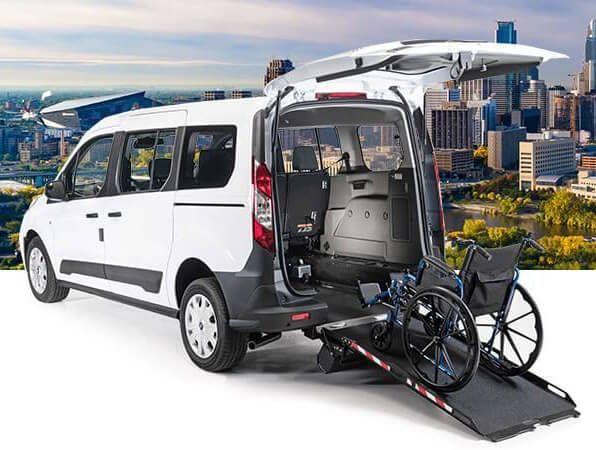
Featured
Highlights: Advantage Conversion · Hybrid Options · 1–2 Wheelchair Positions
Which Ford Transit Layout Matches Your Wheelchair and Passenger Needs?
National Fleet Sales offers Ford Transit 350 configurations with
1–2 wheelchair positions and 5 passengers, or
1 wheelchair position and 7 passengers. A Transit 150 wheelchair and gurney configuration is also available to discuss.
| Vehicle and Layout | Listed Capacity | Wheelchair Access | Starting Price |
|---|---|---|---|
| 2026 Ford Transit 350 — 148-inch wheelbase, mid-roof | 1–2 wheelchairs + 5 passengers | 34-inch-wide rear-entry lift | $78,900 |
| 2026 Ford Transit 350 — 7-passenger layout | 1 wheelchair + 7 passengers | 34-inch-wide rear-entry lift | $78,900 |
| 2026 Ford Transit 150 — 148-inch wheelbase, mid-roof | 1–2 wheelchairs; discuss additional seating and gurney requirements | Confirm with selected configuration | Contact for pricing |
Starting prices exclude tax, registration, and delivery. Final wheelchair capacity and passenger seating depend on the selected floor plan and equipment.
Compatible builds can also be configured for non-emergency gurney or stretcher transportation. Confirm the complete transport layout before ordering.
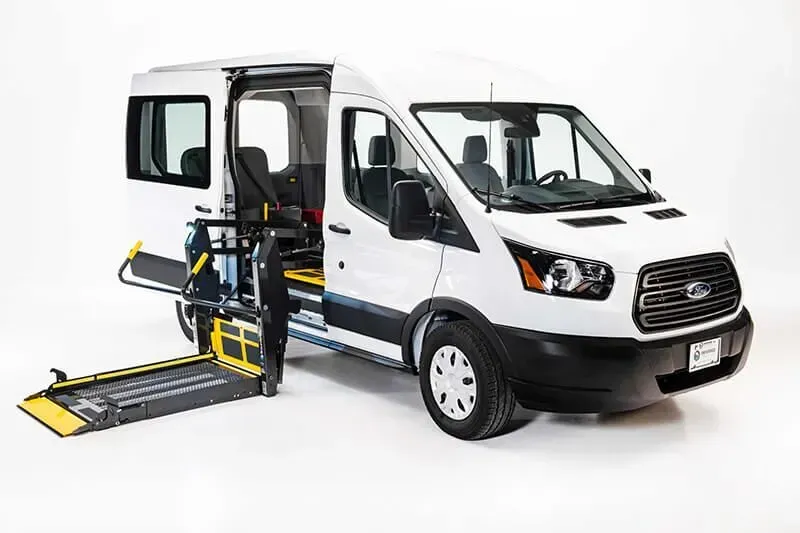
Featured
What Features Are Included in a Ford Transit Wheelchair Van?
National Fleet Sales has wheelchair tie-downs, front and rear air conditioning, durable vinyl seating, and an ABS interior kit among its Ford Transit features.
Additional listed equipment includes:
- Passenger access: A passenger-side sliding door and split-opening rear doors.
- Driver convenience: Remote locking and unlocking, plus a rearview backup camera.
- Vehicle equipment: A full-size spare tire.
- Safety equipment: A safety kit, sign kit, and fire extinguisher.
- Wheelchair loading: A 34-inch-wide rear-entry lift on the listed Transit 350 wheelchair layouts.
When Does a Full-Size Ford Transit Make Sense for NEMT?
A Ford Transit is worth considering when your NEMT routes require wheelchair positions alongside additional passenger seating, or a floor plan configured around gurney transportation.
Before choosing a Transit conversion, review these operating needs:
- Rider mix: Count wheelchair users, accompanying family members, attendants, and other passengers for your typical trips.
- Wheelchair fit: Confirm wheelchair dimensions and occupied weight against the selected lift and interior layout.
- Loading space: Check that regular pickup locations provide room to deploy the lift and move passengers into position.
- Vehicle clearance: Review parking structures, covered entrances, and other height restrictions against the selected van.
- Gurney use: Request a layout showing the required gurney hardware and the seating or wheelchair positions that remain available.
How Does National Fleet Sales Help You Order the Right Transit?
National Fleet Sales helps define your Transit configuration before coordinating financing, purchase documents, and delivery.
1. Describe your routes and riders
Provide your wheelchair count, passenger seating needs, loading conditions, budget, and purchase timeline.
2. Review the Transit floor plan
Compare the 350 and 150 options, confirm lift specifications, and discuss how gurney equipment affects the layout.
3. Finalize the purchase details
Review the vehicle, conversion, equipment, and itemized costs. Complete a lender application if financing is needed.
4. Coordinate delivery
National Fleet Sales arranges delivery across all 50 states and explains estimated timing and delivery costs for your destination.
Frequently Asked Questions
How Many Wheelchairs Fit in a Ford Transit?
The Ford Transit wheelchair vans listed by National Fleet Sales accommodate one or two wheelchairs, depending on the configuration.
The Transit 350 options include a layout listed for 1–2 wheelchairs plus 5 passengers and another listed for 1 wheelchair plus 7 passengers. The Transit 150 is listed for 1–2 wheelchairs. Confirm the final capacity with the selected seating, securement, and gurney equipment.
Should an NEMT Business Choose a Gas Transit or an E-Transit?
The choice depends on daily route distance, charging access, operating schedules, and compatibility with the required mobility conversion.
For an E-Transit, evaluate the converted vehicle’s range and payload against your routes, including time available for charging. Ask National Fleet Sales to confirm powertrain and conversion availability for the lift, seating, and transport equipment your business needs.
What Wheelchair Lift Options Are Available for a Ford Transit?
The listed Ford Transit 350 wheelchair configurations use a 34-inch-wide rear-entry lift. National Fleet Sales also lists a separate Transit 350 gurney configuration with a 34-inch-wide side-entry lift.
Ask about the lift manufacturer, rated capacity, platform dimensions, and operating controls for the specific build. Lift location should also work with your regular loading areas.
Can One Ford Transit Carry Both Wheelchairs and a Stretcher?
Carrying a wheelchair rider and a stretcher passenger on the same trip depends on the specific Transit floor plan and installed equipment.
National Fleet Sales offers Transit configurations for wheelchair and gurney transportation. Before purchasing, confirm whether the proposed layout supports both positions in use together, along with the passenger seating you require.
Are the Listed Ford Transit Wheelchair Vans Mid-Roof or High-Roof?
The specified 148-inch-wheelbase Transit 350 and Transit 150 builds are mid-roof models.
If your operation requires a high-roof Transit, ask National Fleet Sales about suitable vehicle and conversion availability. Confirm overall vehicle height and usable interior space for the exact van you are considering.
Get a Ford Transit Wheelchair Van Quote
Send National Fleet Sales your wheelchair count, passenger seating needs, gurney requirements, and delivery destination. The team will help you compare Transit configurations and price a suitable vehicle for your operation.